How Casual Games Improve Mood, Memory & Concentration
12 minutes to read
|
(72 Views)
Community reaction
In our modern digital age, we are always in contact with something that causes us stress and mental exhaustion, and we are constantly interrupted. We always look for an easy way to clear our minds and be in a good mood. A better thing that we can use for our mental health is something that most of us love doing for a casual game.
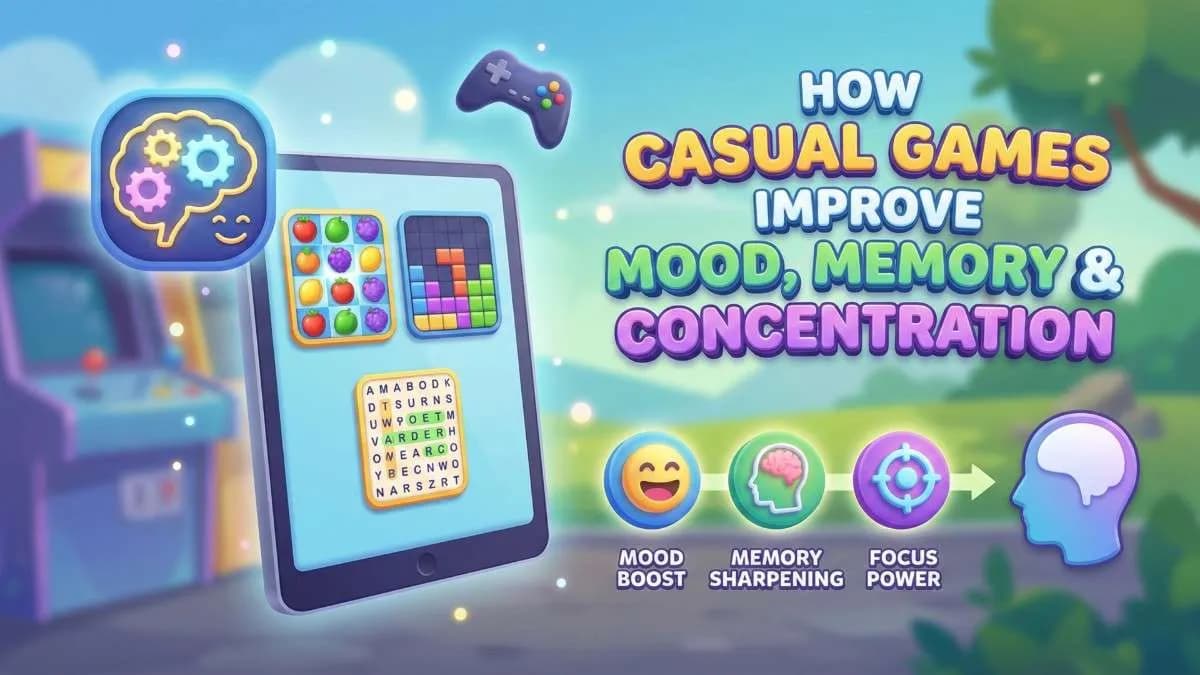
Life is accelerating, and we proceed in the age of mind under stress. Messages, due dates, and the inevitable flow of information crush the brain's chance to relax at its own pace. Accumulated mental stress will then affect mental condition, attention span, and emotional stability of a person. They will be mentally drained, not yet having done any kind of strenuous work.
There is a need for a thing like the strict timetables or systems of efficiency. They can be loosely based on the smallest actions, smallest change can be most reliably profound.
Playing loosely has, nevertheless, happened to be one of such tools. It can offer short ways of inner peace, parcellated experience, with absolutely minimal exertion.
Casual games are meant for laid-back gaming, and it's simply a different exercise than that for competitive or highly scenic work. They put the brain where it is, not where it could be.
They certainly cannot substitute for real rest, but they can complement it. Playing when quite beat around the bush can only take a couple of minutes of rest. Casual play when applied with intention, is the proof that video games can do quite a lot of good, as opposed to merely being a hindrance. The secret knowledge of ho wit works makes playing a mental workout.
What are casual games?
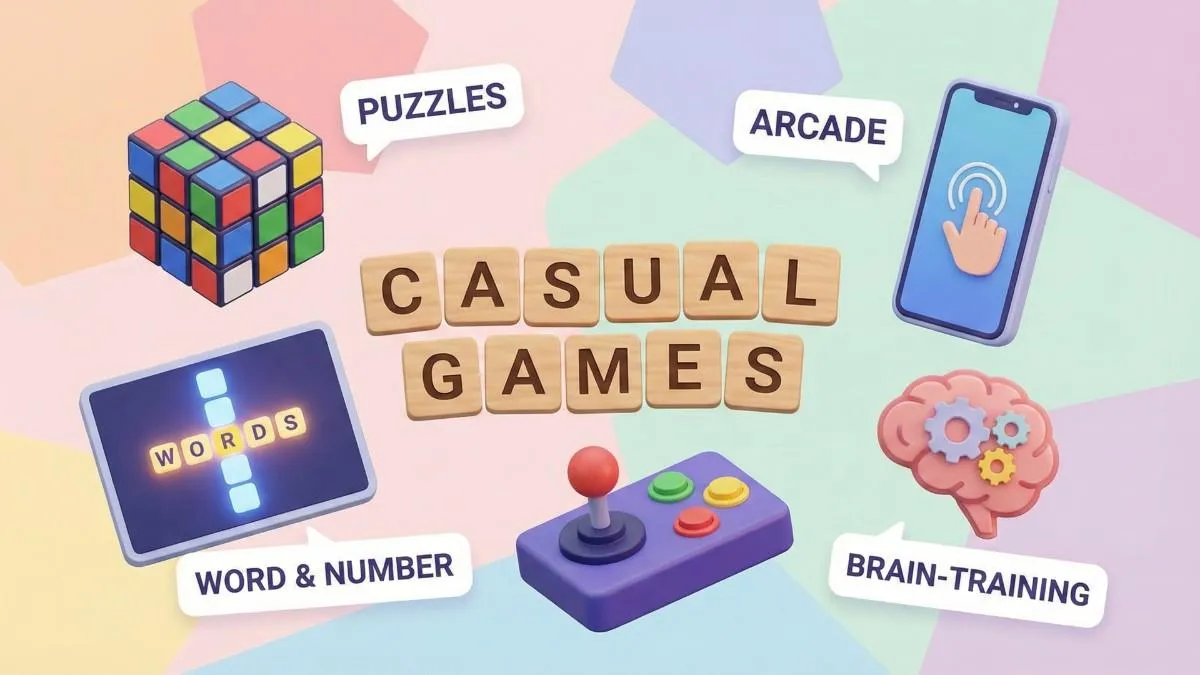
Casual games are games you play for a short period, with simple game rules and an easy approach. They tend to be eye-friendly, as they don’t try to be complex to be attractive. You don't need experience with other games to play them. Mostly, casual games are intuitive and can be learned by playing instead of reading a manual.
They are never complex games with complex mode of gameplay or storylines. They were designed to be played on the spot and in a straightforward manner. They are known for flexible access, as you may quit and start again at any time, lose no content, and feel you didn't run out of time.
Examples:
- Puzzle and logic games
- Word and number games
- Simple arcade or tapping games
- Brain-training challenges
Their lack of complexity also makes them light and funny in a mental way, which is the way they are fun and emotionally engaging.
1. Casual Games and Mood Improvement
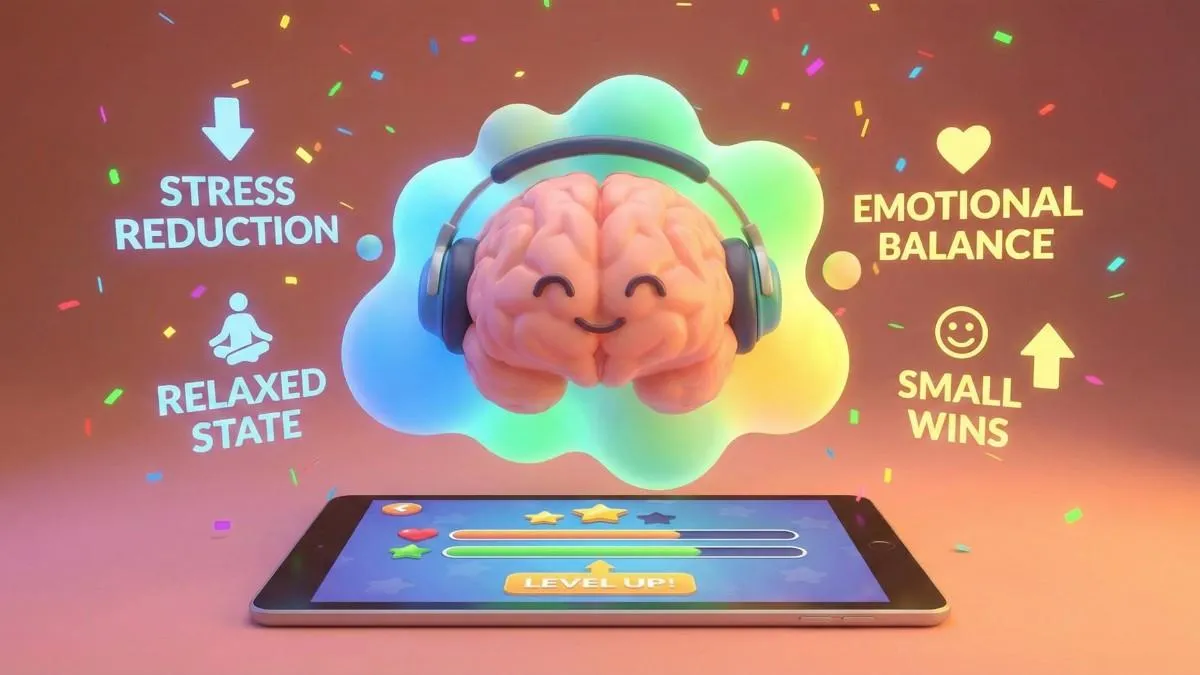
One of the greatest effects casual games have on your mind is always an improvement of your mood. When your emotional battery is getting run-down, there is way too much stress and frustration built up. Your brain requires some very mild stimulation instead of generic G-forces.
Casual games provide such mild stimulation because of their offering easy entertainment. When you replay your fears and bad thoughts, your focus is pushed away from the negative ideas onto a definitely suitable and totally manageable task.
Such a mental diversion plays the role of a soothing remedy to emotional burnout. Your mind gradually stops reacting and starts relaxing on a controllable, comfortable subject.
Dopaminergic neurons also get triggered by casual games, as there are always tiny positive surprises, like finally passing a level or solving an advanced puzzle. These tiny positive moments result in smooth emotional rides with subtle but positive sensations of well-being.
Unlike the stressful sort of hardcore titles, casual games keep your excitement level in check and prevent you from over-reaching, or the other way around, over-sedating yourself and feeling really sleepy.
The visual and sound design plays a crucial part here. With offers of gentle colours, velocity-free animations, and relaxing sound effects, casual gaming technically puts you in a balanced mood.
Playing casual games, you feel better as the game: 1. requires no extra effort, 2. Quickly reassures your stable, controllable mental state, and 3. Endlessly invigorates your mood.
Casual games improve mood because they:
- Battle negative emotions by lowering stress
- Encourage a focused and fluid state of mind
- Stimulate dopamine in the mind in a pleasant way
- Provide sustained, small achievements
With regular, mindful play, these small mood boosts accumulate, helping maintain emotional stability throughout daily life.
2. How Casual Games Increase Memory
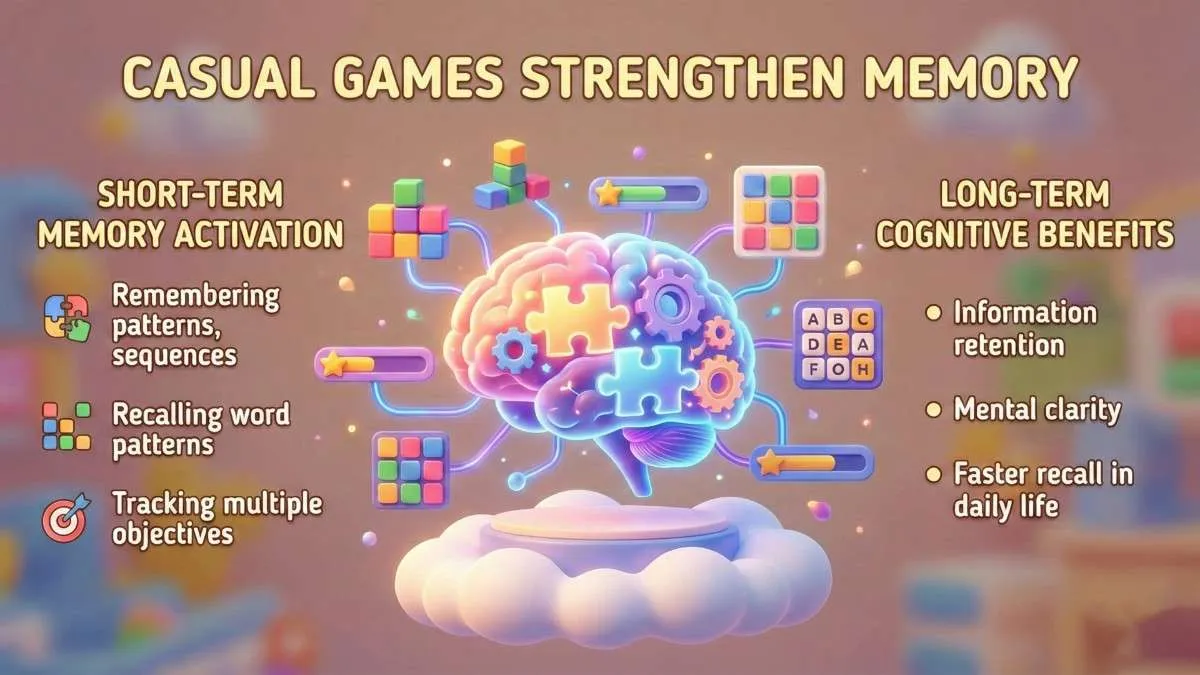
Casual games are a natural catalyst for memory, yet players are unaware they are training. Many casual games require players to memorise patterns, movements, symbols or existing situations in addition to making their next move.
Repeated entertaining is a healthy way to train short-term memory. Instead of feeling like a chore, the brain is gently exercised. Memory can be built with matching games, word puzzles and logic tasks. These are relaxing ways to remember what has been learned.
Casual gaming sessions are brief, which ensures the brain can digest small doses of information without crashing. Without building any fatigue, the brain is able to learn. Memories are reinforced with constant practice. In time, the conscious effort to compensate for a weak memory lessens as a fast, lucky memory replaces it.
Casual games retrain the mind to excel by providing low-pressure errors. They naturally work on memory because:
- They engage short-term memory and working memory.
- Casual games utilise and condition our pattern-recognition aptitude.
- Casual memory games support repetition for memory load.
- Casual games develop a false sense of safety, which aids memory retention.
With daily casual game play, improvements in memory can be felt in the games and across broader workplace and life activities.
3. Improving Concentration and Focus
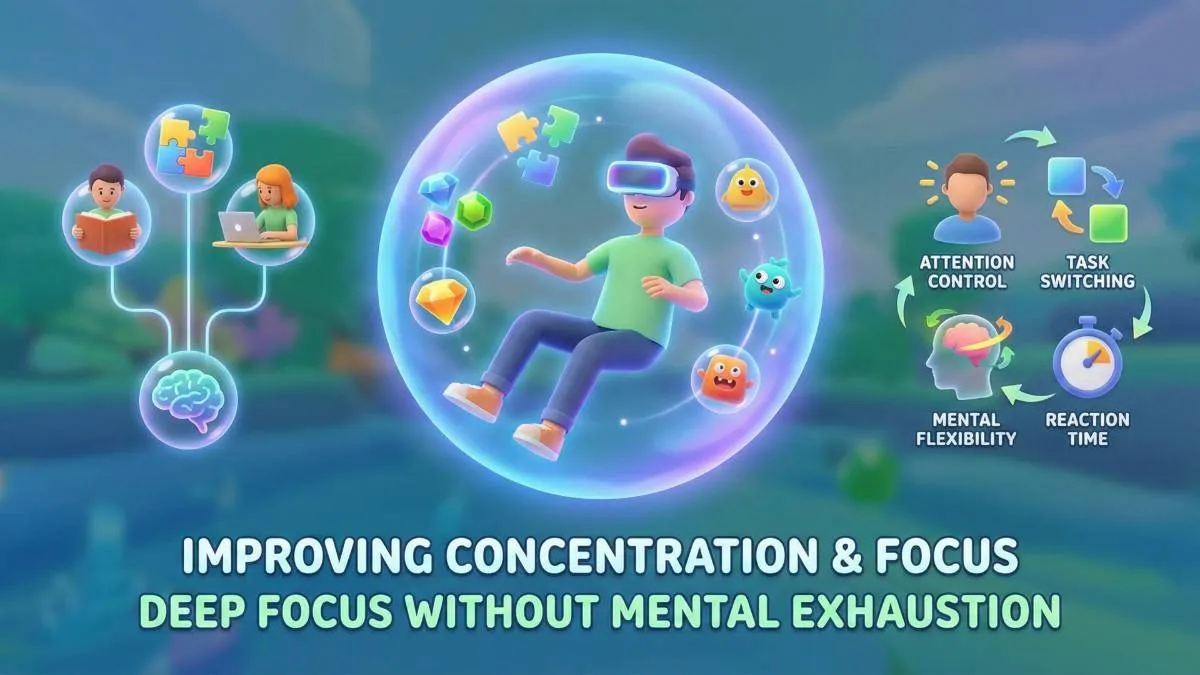
Casuals develop their ability to keep focus by using what psychologists refer to as "soft focus". The attention is held deep enough to remain engaged with the moment, but not so heavily that the gamer gets tired.
The distractions fall by the wayside naturally when at play. Alerts, concerns, and ambient sound allow the focus of attention to settle on a single activity.
This particular focus also relaxes the muscles and allows the mind to focus on something. Minds seem to be made of steel they seem to be able to keep the mind on the same track for a little while longer.
Unlike stressful work, one's leisure games are fun. This makes concentration feel rewarding instead of obligatory. Other games demand responding to manipulating rules or patterns, which enhance functions of attention control. The players learn to keep alert, too, without any tension.
Eventually, these skills are sapped into real-life functions such as reading, studying or thinking.
Casual games improve focus because they:
- Train sustained attention in a low-stimulation environment
- Lower the wandering mind
- Enhance focus control
- Promote awareness of the present moment
Plays regularly strengthen the ability to concentrate without causing fatigue.
4. Casual Games as a Mental Exercise Tool
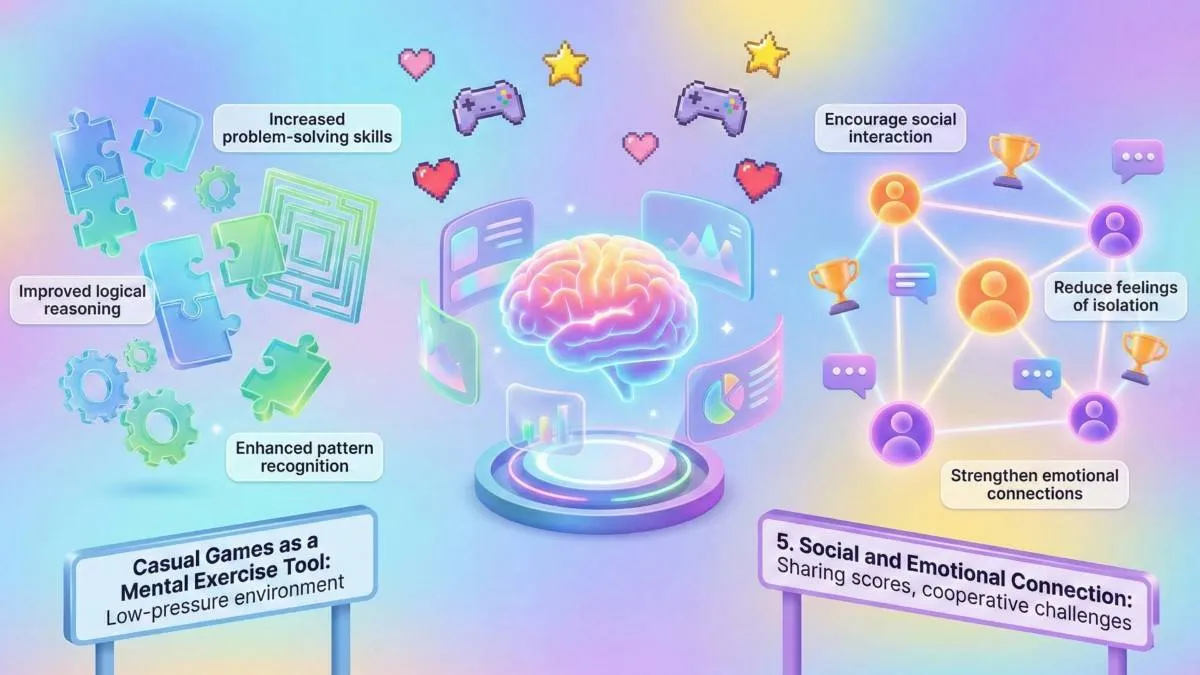
Casual games are brain workouts in disguise. What do they do? Do they stress or frustrate the brain as they challenge it? No.
Casual games provide, in a fun environment, the opportunity to experiment. When playing some of these games, errors are not considered failures. Exercises involving logical reasoning, number puzzles and pattern games will help practice the reasoning. The more the brain needs to work to learn, the more it learns. The learning is enjoyable and non-intrusive. Players often don't notice that they learn cognitive skills.
They also encourage flexibility. Bouncing between actions or plans encourages with variety. The design of short sessions helps prevent mental exercise from becoming too much.
Casual games function as brain training because they:
- Enhance your problem-solving skills
- Better develop logical argumentation
- Improve pattern recognition
- Promoting flexible thinking
Thus, allowing casual games to be a useful mental workout for children and the elderly.
5. Healthy Gaming Habits Matter
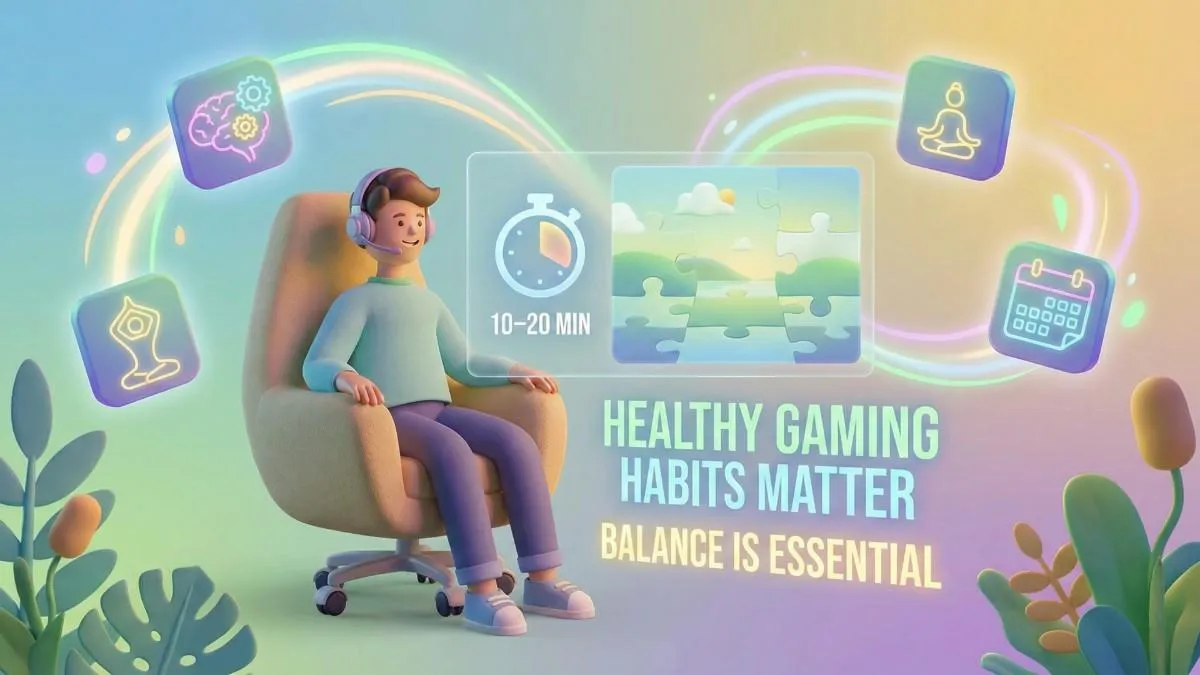
The advantages of the casual game also depend on the manner in which it is played. Brief, purposeful play sessions far surpass (much more beneficial than) longer, aimless game playing.
When consumed thoughtfully, casual games become mental refreshers, not diversions; they enable regeneration, not denial. It is also very important to choose the right game. The most suitable games are calming and mind-challenging, so it can be good for health.
The feeling of emotional response is also crucial. If a game is making someone frustrated, it has lost its aim. Boundaries should be flexible. Keep play sweet and simple. We need to play to balance the life and not vice versa.
When used appropriately, seemingly casual games serve as a means of self-care, rather than habit of evasion.
Healthy casual gaming works best when you:
- Restrictions on sessions—short breaks
- Select games which are more relaxing
- Use relaxed, non-threatening games
- Stop when you get frustrated
Mindful use makes sure that games enhance mental well-being, not destroy it.
Social and Emotional Connection Through Casual Games
Casual games may also contain more sophisticated social elements in order to help facilitate users' well-being, for example, sharing scores within-game, completing a challenge in a day or playing cooperatively can all be additional ways that users feel connected.
Even a modest level of interaction can go a long way toward alleviating the loneliest of loneliest. Simply knowing that someone else out there is playing the same game produces an understated sense of community.
Financial games are also more social, and the social aspects are not burdensome. The players may not need to share the competitive attitude or engage in extensive texting.
This lets interaction be optional and safe. Social interaction is only up to a player's own time. Emotion regulation provided by casual games: Even motivation by positive states of mind, reinforced through familiar progress charts, daily goal sets help to establish routine and comfort.
For solo players, this sometimes feels like if the game were an oversized pal. Going throughthe same motions and having the challenge to rely on can be a comfort:
Casual games support social and emotional health because they:
- Elevate a fun, positive atmosphere
- Decrease the feeling of being alone
- Providing comfort and emotional security
- Methods of alleviating social pressures competitively
These small social contributions can start to tip the emotional scales without overwhelming the player.
Final Thoughts
Casual games give much more than joy, they can be used effectively to maintain emotional equilibrium and relax the mind. This is their power. Lite tasks, a little bit, not tough trials, forthcoming.
The effects of casual games on mood are so positive that they can also be of help in the areas of stress reduction, soft memory recall, and soft focus concentration. In a world of distraction, they are indeed calm structures.
It doesn't take time-intensive hours of play. Sometimes, a handful of minutes alone can be enough to relax your mind. You don't need to knock out a casual game when you're fresh as a daisy in the morning or fresh off the boat after work. They fit comfortably into your day-to-day rhythm.
They are a reminder that help for mental health doesn't need to be difficult. Sometimes a small game can be just enough of a silver lining that you start to feel better, think better, and focus better.
Related Articles
Best Free Casual Games for Office Breaks (No Login Needed)
Jan 20, 2026 · 12 min
Fun Mini Games That Don’t Distract You From Daily Work
Jan 20, 2026 · 10 min

Lightweight Online Games You Can Play on Any Device
Jan 20, 2026 · 18 min
Best Quick Brain Games to Refresh Your Mind in 5 Minutes
Jan 20, 2026 · 12 min
Simple Online Games to Beat Boredom Instantly
Jan 20, 2026 · 15 min
Why Kridaah Is the Best Place for Quick & Fun Mini Games
Jan 17, 2026 · 12 min